Shed Pad Installation in Schenectady, NY: Gravel Shed Pads and Site Prep
Level Gravel Pads and Site Work for New Sheds in Schenectady, Rotterdam, Guilderland, Albany and Nearby Towns
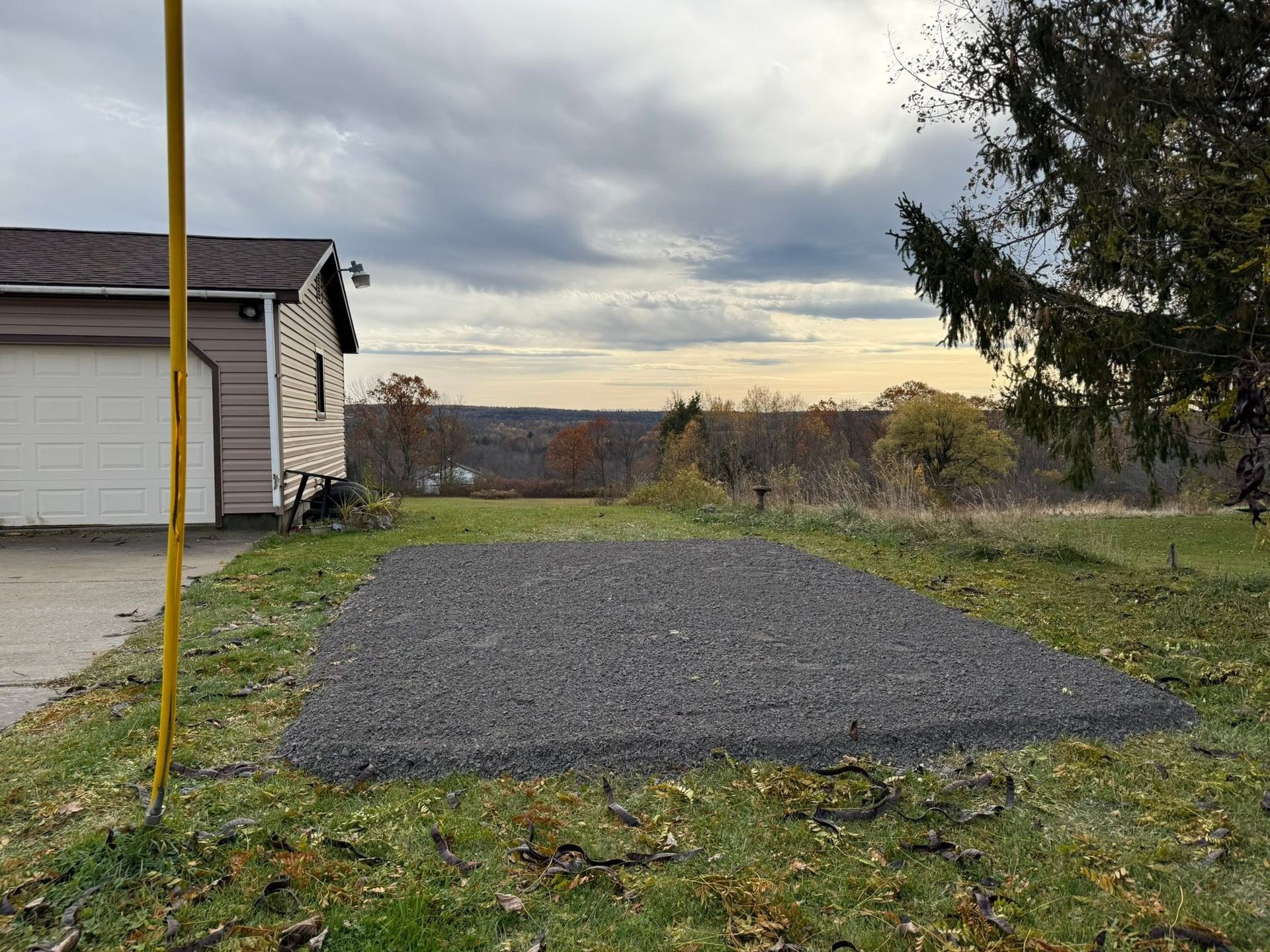
Lake Connection Excavation & Landscaping offers shed pad installation in Schenectady, NY, building level, compacted gravel pads for new sheds across Schenectady County and nearby towns. We work with many local shed companies, so many of our customers call us right after ordering a shed and need the ground ready before delivery day. Shed site work is the excavation side of our business: we clear the spot, cut and fill it level, frame it and build up a crushed stone base the shed can sit on for years. Call (518) 852-2869 with your shed size and delivery date.
Call (518) 852-2869Shed Pad Installation and Site Prep in Schenectady
Gravel Shed Pads
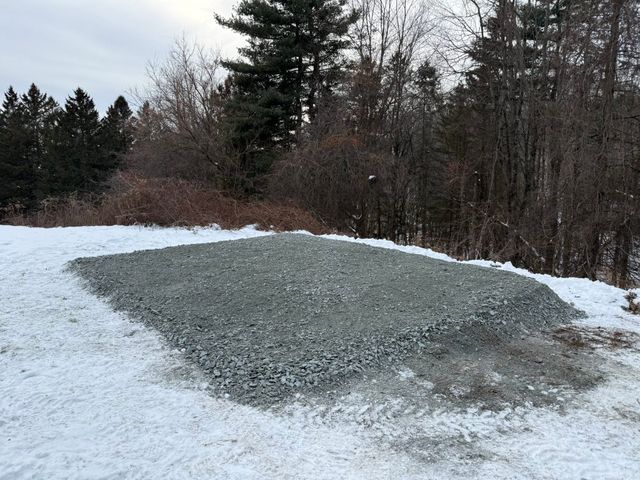
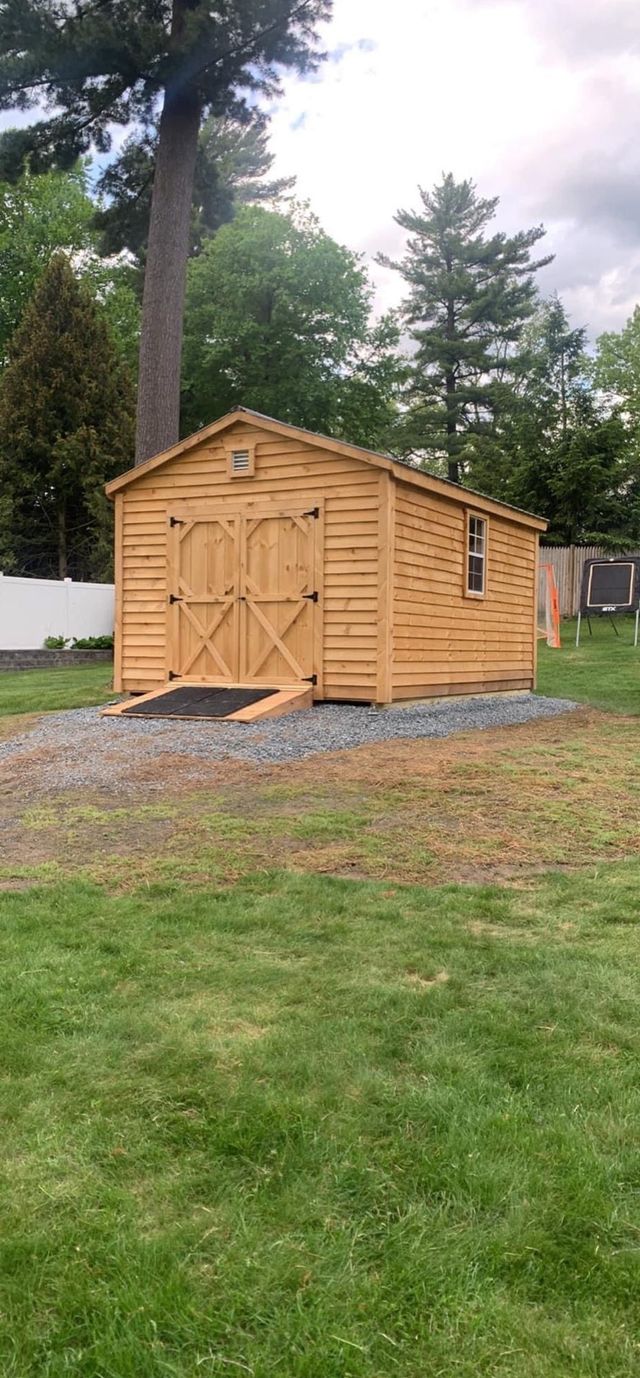
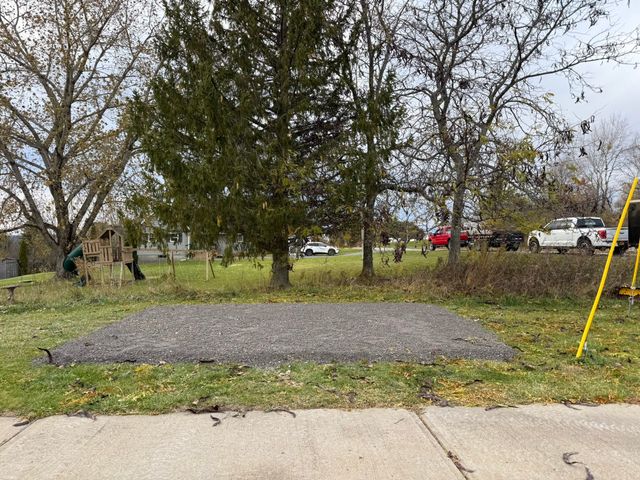
A shed is only as good as the ground it sits on. Lake Connection Excavation & Landscaping builds gravel shed pads that give a new shed a flat, firm and well-drained base. The work starts by clearing and leveling the spot, then crushed stone is spread and compacted so it will not shift under the weight of the shed and everything you store in it. A level pad keeps the doors opening and closing the way they should, keeps the floor off wet ground and helps the shed last for many years.
Clearing and Leveling the Shed Site
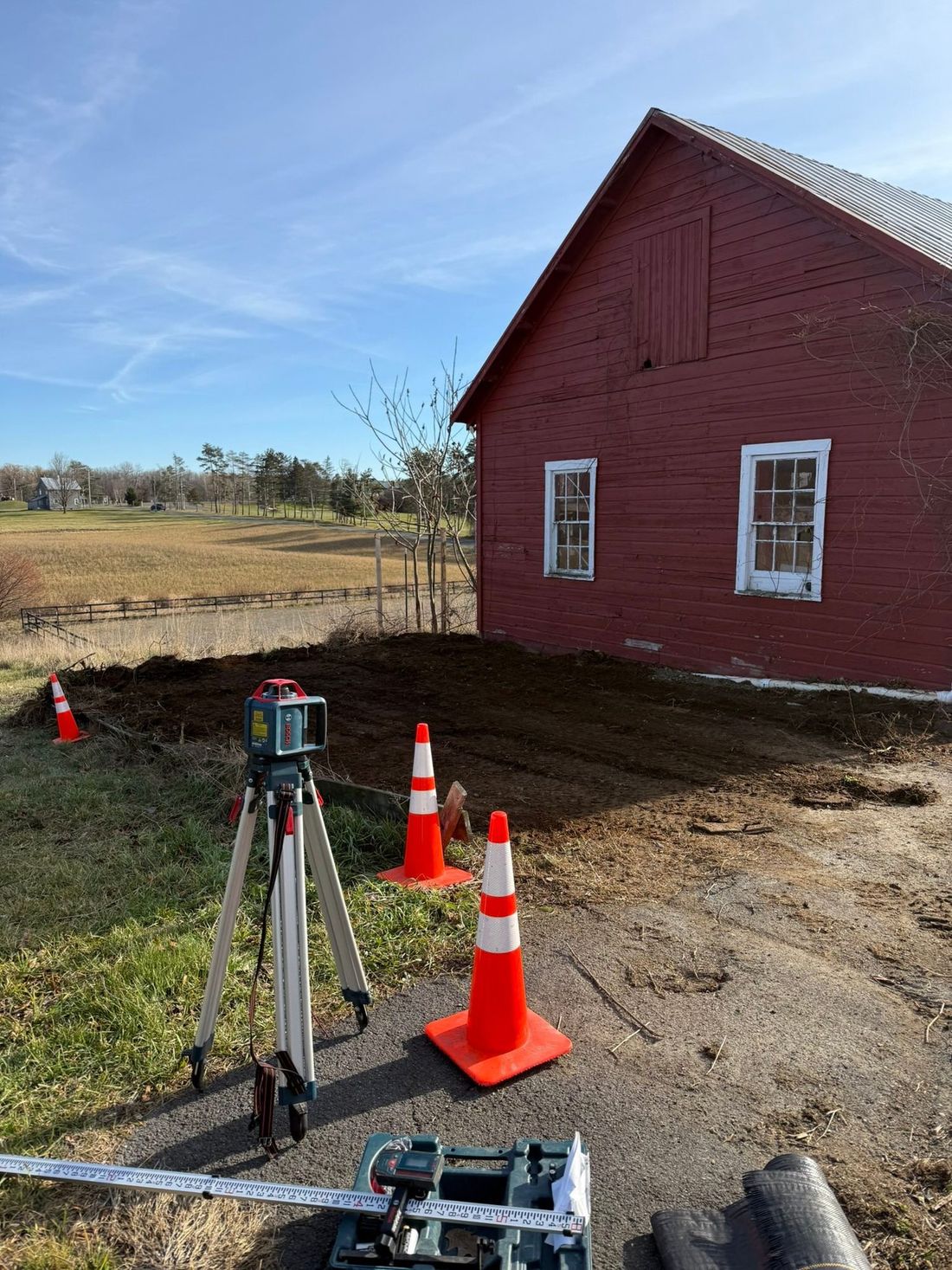
Most backyards are not as flat as they look, and a shed shows every inch of slope. Before any stone goes down, the site has to be cleared of sod, roots and soft topsoil, then cut and filled until the base is level from corner to corner. On a sloped yard, the low side is built up and held in place so the pad does not spread over time. This is the excavation side of our business, and it is the step that decides whether the shed will still sit square years from now.
Timber Frames Around the Gravel
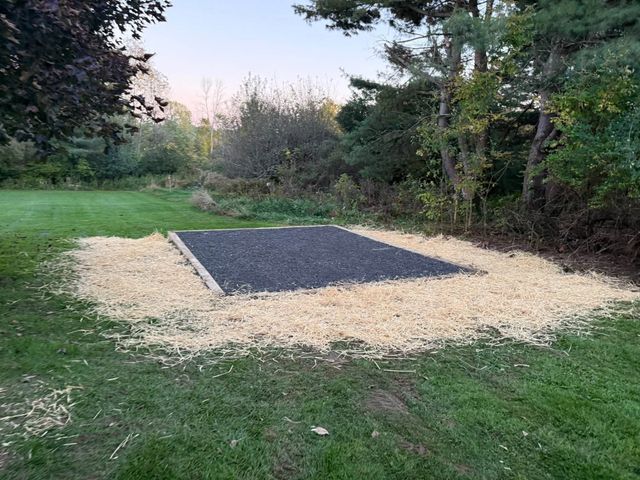
Many gravel shed pads are built inside a frame of timbers that holds the stone in place and gives the pad a clean, square edge. The frame keeps gravel from washing out at the corners during heavy rain, makes it easier to get the pad exactly level and looks neater against the lawn. On a slope, the frame can be built up on the low side to hold the extra stone. Several of the shed pads in our photos were built this way.
Why a Shed Needs a Proper Base
Keeping the Shed Level
When a shed sits on bare ground or on blocks set into soil, it settles unevenly as the ground freezes, thaws and softens with rain. Over time the frame racks, the doors bind and gaps open along the walls and roof. A properly built, compacted gravel pad spreads the weight of the shed evenly and gives it a stable surface that stays put through the seasons.
Drainage and Frost Under a Shed
Winters in the Capital District bring deep frost, and spring brings a lot of water as the snow melts. Water that sits under a shed freezes and lifts it, and wet ground keeps the floor damp and invites rot. Crushed stone lets water drain down and away instead of pooling, and it gives the floor framing some air underneath. Setting the pad slightly above the surrounding ground helps even more on a yard that stays wet in spring.
Gravel Pad or Concrete Slab?
For most backyard storage sheds, a gravel pad is the practical choice. It drains well, generally costs less than a concrete slab and can be adjusted later if the ground moves. Concrete slabs are usually chosen for heavier uses, such as garages and workshops that hold vehicles or heavy equipment. Many shed builders recommend a gravel base for their buildings, and our shed site work is built around that kind of pad.
Working With Your Shed Company
Getting the Pad Ready Before Delivery
A lot of our shed pad customers come to us through the local shed companies we work with, right after ordering a new shed. The pad needs to be finished, level and the right size before the delivery date, because the delivery crew sets the shed on whatever base is there. Tell us the size of the shed, where it is going and when it is due to arrive, and we can plan the site work around your delivery date.
Access for the Delivery Truck
A shed has to get from the truck to the pad, and that path needs room. Delivery crews usually need a clear, firm route several feet wider than the shed, without low branches, tight gates or soft ground in the way. While we are preparing the pad, we can look at the route with you and point out anything that might cause trouble on delivery day. Sorting out access ahead of time keeps the delivery quick and protects your lawn from deep ruts.
Pad Size and Shed Size
A gravel pad should be larger than the shed itself, usually by about a foot on every side. The extra width gives rain dripping off the roof somewhere to drain instead of splashing back against the walls, keeps the edges of the shed off the softer border of the pad and leaves room for a ramp at the door. Your shed company's specifications are the best guide, and we size the pad to match the building you ordered.
Before Your Shed Pad Is Built
Permits and Setbacks for Sheds
Before a shed goes in, check what your town requires. Many towns ask for a building permit once a shed passes a certain size, and nearly all have setback rules for how close a shed can sit to property lines, the house and a septic system. A homeowners association may have its own rules too. Your town's building department can tell you what applies, and knowing early keeps you from building a pad in a spot that won't be allowed.
Calling 811 Before Digging
New York law requires anyone digging to contact 811, the Dig Safely New York call center, at least two full working days before the work starts. The utilities then mark buried gas, electric, water and cable lines with paint or flags. Shed pads go in at shallow depths, but buried service lines are often shallow too, so the call matters even on a small job. Ask us about it when we schedule your shed pad.
Choosing the Spot in Your Yard
The best place for a shed is on high, well-drained ground with room to open the doors and walk around all four sides. Avoid low spots where water collects in spring, the area right under large trees and places tight against a fence where you can't reach the back wall. Think about how you will use the shed, too: a lawn tractor needs a clear path and a ramp, while garden tools are handier near the beds. We can walk the yard with you and talk through the options before any work begins.
Why Choose Lake Connection Excavation & Landscaping for Shed Site Work
Shed Pads Are a Regular Part of Our Season
Shed pads are a regular part of every season for Lake Connection Excavation & Landscaping, through our work with many local shed companies. That steady work means the steps are routine for our crew: clear the site, set it level, frame it, spread the stone and compact it. Shed site work is a niche many landscapers don't take on, and having a company that does it regularly saves you from hunting for an excavator who will take on a small job.
Excavation and Landscaping Together
Our business brings together excavation and landscaping, so the same company that builds your shed pad can also handle the yard around it. If you want a mulch bed along the front of the shed, stone along the drip line or a landscape install elsewhere on the property, we can price it at the same time. The same crew also builds and repairs gravel driveways. One call covers the ground under the shed and the yard around it.
What Our Customers Say
Every one of our 8 Google reviews gives Lake Connection Excavation & Landscaping five stars, for a 5.0 rating. Customers describe our crew as friendly, helpful, quick and professional and our service as reliable and timely, which matters most when a shed pad has to be finished before a delivery date. Two of those reviews are below, quoted word for word.
Awesome, reliable, timely service. Highly recommend these landscaping business!
Christina P., Google review
… They do a fantastic job. They are friendly, helpful, quick, and professional. I would highly recommend them.
Nalene V., Google review
Shed Pads Across Schenectady County and the Capital District
Lake Connection Excavation & Landscaping builds shed pads in Schenectady and Rotterdam and throughout Guilderland, parts of Albany County including Albany, Duanesburg and Amsterdam. We are based at Mariaville Lake, west of Schenectady, and our shed site work follows the deliveries of the local shed companies we work with across the area. If your shed is headed somewhere nearby that isn't listed, call and ask.
Shed Pad FAQs
It depends on the size of the shed, the slope of the yard and how much stone and fill the pad needs. A flat spot for a small shed costs much less than a large pad on a hillside. Call us with the shed size and tell us about the spot, and we will give you a price.
About a foot larger than the shed on every side. That extra width lets roof runoff drain away from the walls and keeps the shed's edges on solid stone. Check your shed company's specifications, since some builders ask for a specific size.
Most gravel shed pads are about four to six inches of compacted crushed stone on a cleared, level base. A sloped yard needs more stone on the low side to bring the pad level.
Crushed stone, which has angular edges that lock together when compacted. Round stone such as pea gravel rolls underfoot and shifts under weight, so it isn't used for the base.
Most standard shed pads are a one-day job once work starts. Large pads, steep slopes or sites that need a lot of clearing take longer.
Yes, in most cases. The low side is built up with stone held in place by a timber frame, and the pad is compacted until it is level. Very steep sites may need more work, which we will talk through when we see the yard.
Yes. We work with several local shed companies, and a lot of our pad work comes from their customers. If you bought your shed elsewhere, call us anyway with the size and delivery date.
Before the delivery date, with a few days to spare. Call us as soon as you know your shed size and delivery date, especially in spring, when shed deliveries and landscaping work both pick up.
Partly. A raised gravel pad keeps water from sitting under the shed, but it won't fix drainage across the rest of the yard. If you can, choose a higher, drier spot for the shed.
We build shed pads in Schenectady, Rotterdam, Guilderland, Albany, Duanesburg and Amsterdam. Most of our shed work is in Schenectady County.


